
Chianti Rufina · Valdisieve · near Florence
Chianti Rufina: the territory, the DOCG and the villages of the Valdisieve
Chianti Rufina is a sub-zone of Chianti DOCG on the hills north-east of Florence, in the Valdisieve. It is a landscape of vineyards, olive groves and villages, on the slopes of the Tuscan-Romagnolo Apennines: a more compact area than other parts of Chianti, and one tied for centuries to Sangiovese.
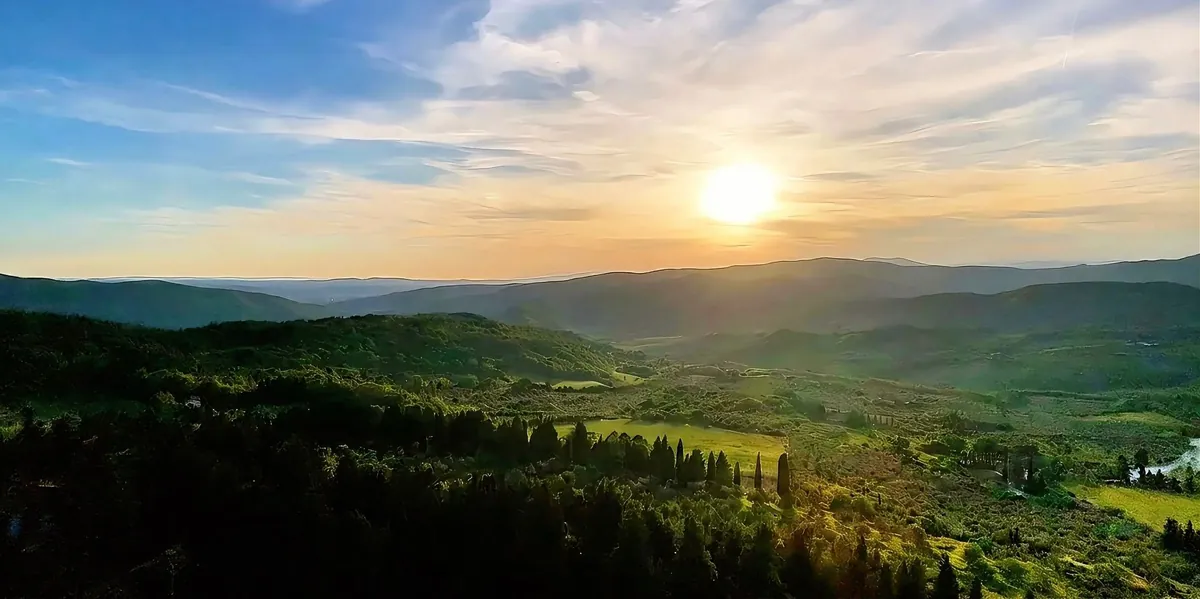
Agriturismo Tassinaia stands at Montefiesole, in the hills of Pontassieve, 19 km from Florence. From here the area is within easy reach for a day out: Rufina is a 10-minute drive, Pelago 15 minutes. Pontassieve station is a 10-minute drive away, and the train to Florence Santa Maria Novella takes about 25 minutes.
Where is Chianti Rufina?
The Chianti Rufina Consortium describes this territory as a winegrowing area on the slopes of the Tuscan-Romagnolo Apennines, in the province of Florence. The production zone covers the municipalities of Pontassieve, Rufina, Londa, Pelago and Dicomano.
The river running through the valley is the Sieve. The landscape mixes vineyards, olive groves and woodland. The Consortium calls it “the highest Chianti”: the vineyards face south and south-west, at altitudes given as up to about 400 metres.
From history to the DOCG
The earliest records of Rufina wines, according to the Consortium, date back to the early fifteenth century. On 24 September 1716, Cosimo III’s edict marked out four Tuscan wine zones. The historical name for this area in the edict is Pomino, not Rufina: the Consortium and local sources link that early protection to the Chianti Rufina of today.
A 1932 ministerial decree brought the first official delimitation of Chianti and the geographic specification “Rufina”. DOC status came in 1967, DOCG in 1984. It is the smallest of the seven Chianti specifications, alongside Colli Aretini, Colli Senesi, Colli Fiorentini, Colline Pisane, Montalbano and Montespertoli.
Pomino, a hamlet of Rufina, also has its own DOC for white and red wines, as Visit Tuscany notes.
The wine
The reference grape is Sangiovese. The Consortium describes soils of limestone, galestro and alberese, and a microclimate of warm days and cool summer nights. The result, again in the Consortium’s words, is an elegant wine with good acidity, notes of woodland fruit and spice, and a certain capacity to age.
For winery visits, we have a practical guide to choosing and booking a visit near Pontassieve. An official starting point is the Chianti Rufina Consortium’s map of visits and tastings.
The villages, in brief
Pontassieve
Pontassieve is the gateway to the valley. The Medici Bridge, recently restored and still open to cross, and a walk in the centre are worth a stop. For what to see in town and in the Valdisieve, we have a guide to the villages; for a day in the city, see the guide to Pontassieve station and the train to Florence.
Rufina
Rufina is the town that gives the sub-zone its name. Visit Tuscany describes a landscape of vineyards and olive groves. In the town you can visit the Museo della Vite e del Vino, housed in the cellars of Villa di Poggio Reale at Viale Duca della Vittoria 7, in the same complex as the Consortium. Opening times should be checked on the Comune di Rufina website or on Visit Tuscany.
Pelago
Pelago is a village in the hills east of Florence, within the DOCG area. Visit Tuscany links its core to the castle of the Conti Guidi and the pieve of San Clemente, and places it about thirty kilometres from the city.
Landscapes in every season
It is a landscape to enjoy without hurry, in every season.
In spring and summer the hills are there to explore on foot or by e-bike: from walks around Montefiesole to the e-bike and MTB trails in Pontassieve and the villages of the valley. At Tassinaia you can book a walk with the wolves and a session in the private hot tub, looking out over the hills.
Autumn brings the grape harvest, the colours of the vineyards and, between October and November, the olive harvest: Tassinaia’s oil is cold-pressed. We write about this in our guide to autumn in Tuscany near Florence.
In winter there is the quiet of the hills and a more intimate stay, with Florence reachable by train from Pontassieve.
Where to stay and how to get here
Tassinaia, at Montefiesole, is a quiet base for exploring Chianti Rufina and reaching Florence in the same stay. From here you can set out for the villages, the wineries and the walks, and come back to the hills in the evening. When you are ready, you can book your stay; if the trip is built around the city as well, there is also our page on a farmhouse near Florence.
Frequently asked questions
What is Chianti Rufina?
Chianti Rufina is a sub-zone of Chianti DOCG, on the hills north-east of Florence in the Valdisieve. It is the smallest of the seven geographic specifications of Chianti.
Where is Chianti Rufina, and which municipalities does it include?
It lies in the province of Florence, on the slopes of the Tuscan-Romagnolo Apennines. According to the Chianti Rufina Consortium, the production area covers the municipalities of Pontassieve, Rufina, Londa, Pelago and Dicomano.
How does it differ from Chianti Classico?
They are different denominations. Chianti Rufina is a sub-zone of Chianti DOCG north-east of Florence; Chianti Classico is a separate denomination, between Florence and Siena.
A stay in Chianti Rufina
If you are thinking of a few days in Chianti Rufina, with Florence within easy reach by train, we can help you plan your stay.