
Pontassieve · Old town · Valdisieve
What to see in Pontassieve: a walk through the historic centre
A route on foot between the town hall square, the gates of the fourteenth-century castle, the Medici Bridge and the spot where the Arno meets the Sieve.
Pontassieve grew up where the Sieve flows into the Arno, and its name comes from a bridge. The old centre is small and best explored on foot: here are five stops, planned for those coming down from the Montefiesole countryside and for those arriving from Florence by train. For places further afield, from the Pieve to Vallombrosa, see our guide to what to see in Valdisieve.
Getting to the centre
From Tassinaia, the centre and the station are about a 10-minute drive. If you are coming from Florence, the train to Pontassieve usually takes about 25 minutes: times, tickets and free parking at the station are in our guide to Pontassieve station and the train to Florence.
1. Piazza Vittorio Emanuele II and Palazzo Sansoni Trombetta
The natural starting point
Until the sixteenth century the square was the heart of the town’s economic, social, political and religious life. On its north side stands Palazzo Sansoni Trombetta, now the Town Hall: it was built in the mid-eighteenth century and in the nineteenth century passed to the Trombetta, a family of bankers from Corfu related by marriage to the Sansoni, whose initials are intertwined on the facade. Inside, in the Sala delle Eroine, is a cycle of frescoes by Ferdinando Folchi, dated to around 1860–1865. As it is the seat of the municipality, it is best to ask at the Town Hall before trying to see the interiors.
The first stage of the Way of St Francis from Florence, about 19 km along the Arno, also ends in this square: if you are walking, stages and places to stay are in our guide to the walking routes in Pontassieve: Way of St Francis and Cammino di Dante.
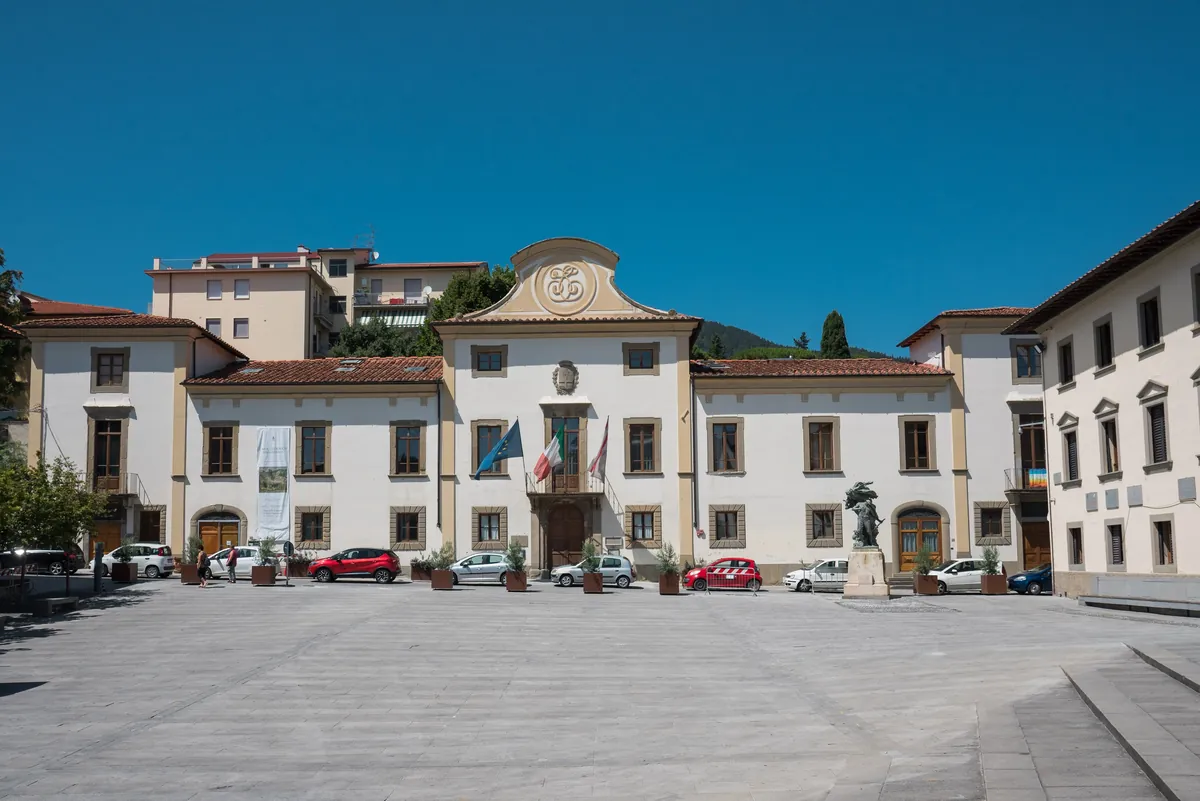
Photo: Comune di Pontassieve, CC BY 4.0 (resized)
2. The gates of Castel Sant’Angelo: the Clock Tower
What is left of the Florentine fortress
The settlement was originally called Castel Sant’Angelo: in 1357 the Florentine Republic had a fortress built here to control the roads towards the Romagna and the Casentino. Of the walls, three of the four gates survive: the Porta Aretina, known as the Torre dell’Orologio (Clock Tower); the Porta Fiorentina, through which travellers from Florence entered; and the Porta Filicaia, of which the arch remains. The fourth, the Porta del Capitano, has been destroyed.
The Clock Tower is the best preserved, with its crown of rectangular battlements still showing its fourteenth-century look. The inside can only be visited on request at the Town Hall. From the Porta Fiorentina runs the only stretch of medieval wall still visible today, between the De Amicis primary school and the Cinema Italia. The centre was heavily bombed in the Second World War because Pontassieve was a road and rail junction, so the old walls now have to be read in fragments.
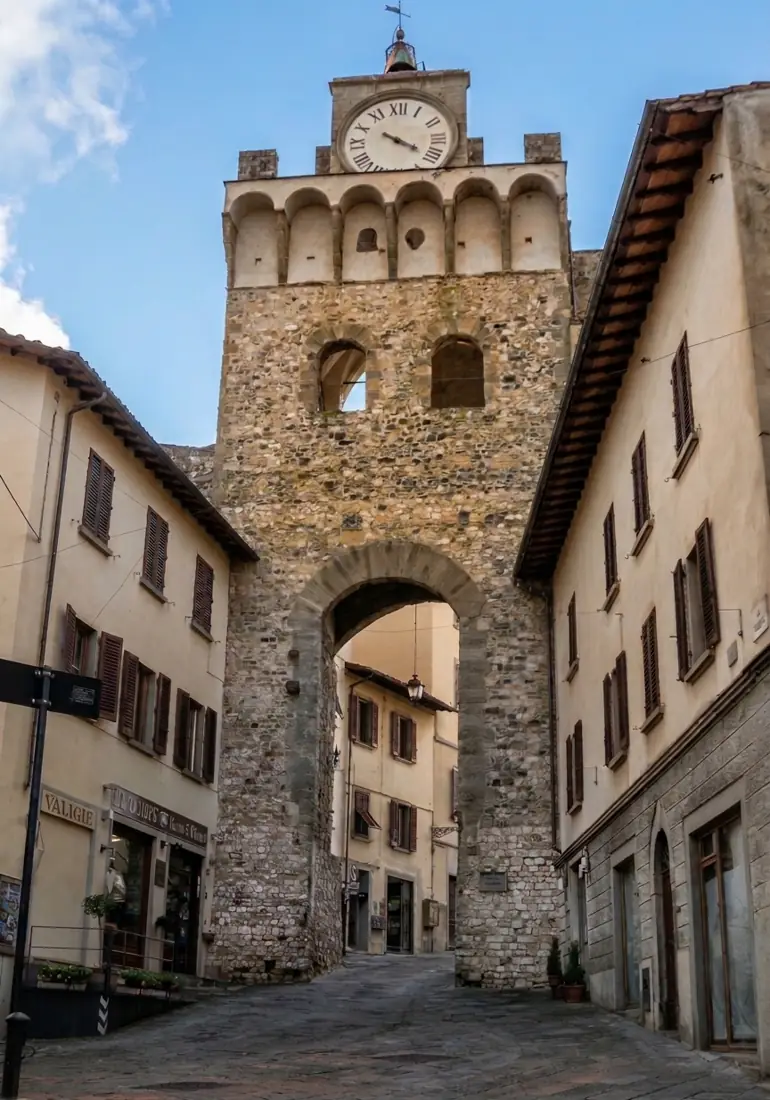
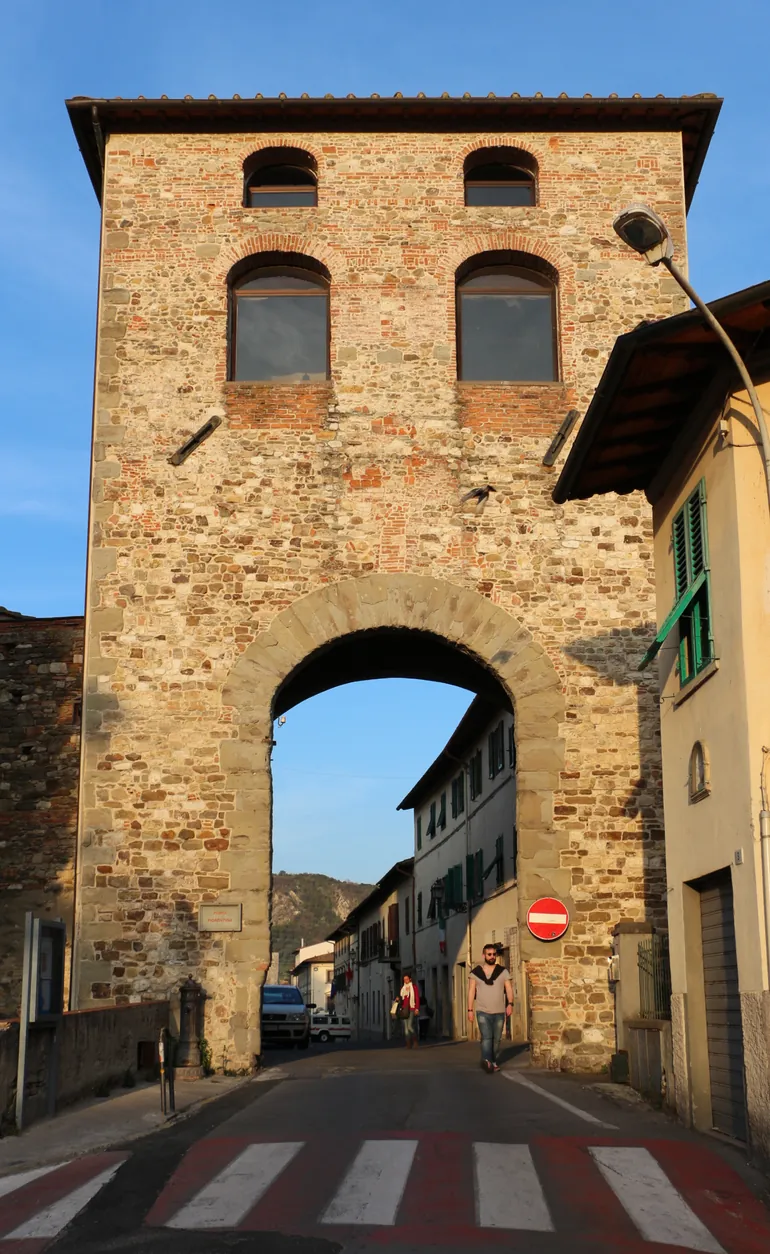
Photo: Sailko, CC BY 3.0, via Wikimedia Commons (resized)

3. The Medici Bridge
The bridge that gave the town its name
The bridge links the old town with San Francesco, a hamlet in the municipality of Pelago, and carried the road that joined Florence to the Mugello, the Casentino and Arezzo. In the mid-sixteenth century a flood of the Sieve destroyed the earlier bridge; in 1555 Cosimo I de’ Medici commissioned a new one from Stefano di San Piero a Ponti and his son Tommaso, probably to a design by Bartolomeo Ammannati. Two brick arches rest on a central pier of pietra forte stone, bearing the Medici coat of arms. It was restored in 1788 at the wish of Grand Duke Pietro Leopoldo and partly rebuilt after the damage of the Second World War. The Way of St Francis crosses it the day after arriving in town, heading for San Francesco di Pelago.
In 2026 the Municipality completed the first phase of works on the central pier and the foundations: since 25 November 2026 the bridge is open to traffic again, one-way from Pontassieve towards San Francesco and closed to vehicles over 3.5 tonnes. A second phase, devoted to restoring the historic elements, is planned for 2027.
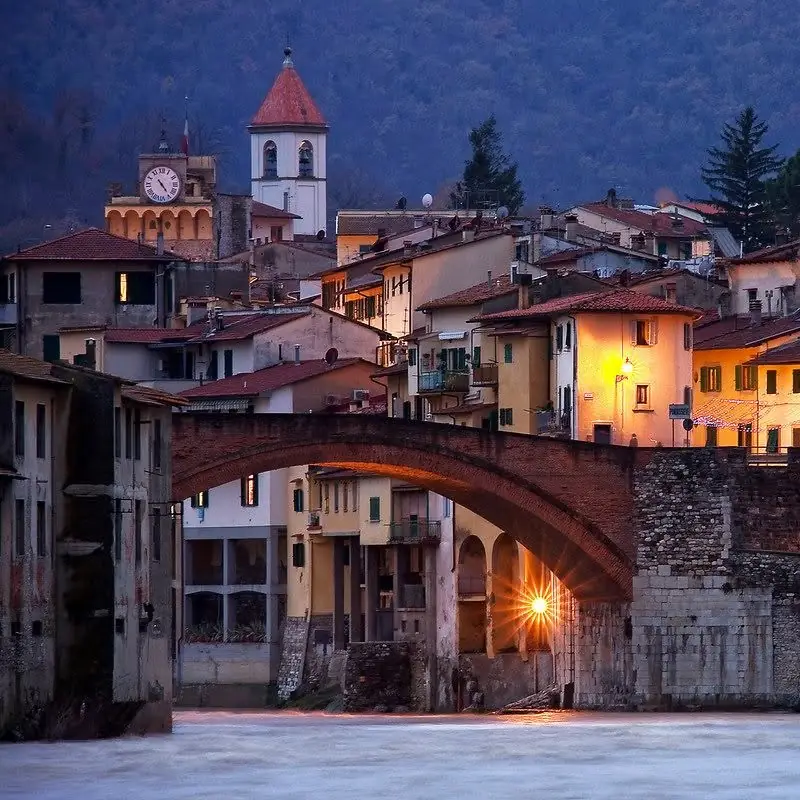
4. Where the Arno meets the Sieve
Where the town took shape
The pedestrian walkway on Viale Diaz leads to the confluence of the two rivers: the place that explains the name and the history of Pontassieve, born at a crossing of roads and waters between Florence, the Mugello, the Casentino and the Valdarno.
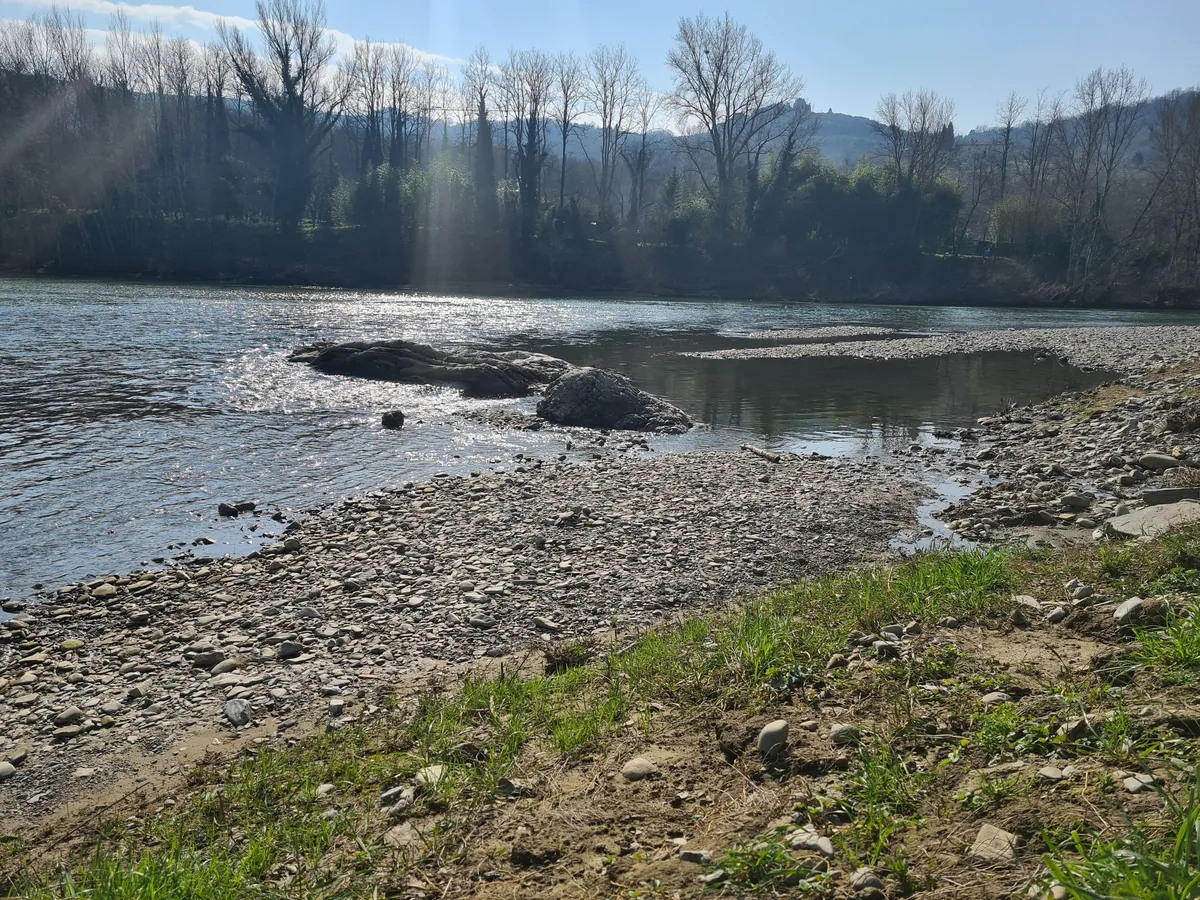
Photo: Comune di Pontassieve, CC BY 4.0 (resized)
5. Parco Fluviale Fabrizio De Andrè
A stroll along the Arno
The park lies along the Arno, in the southern part of town, away from the traffic and the houses. It is a public area made for walking, sport, children and dogs: a good way to end the loop.
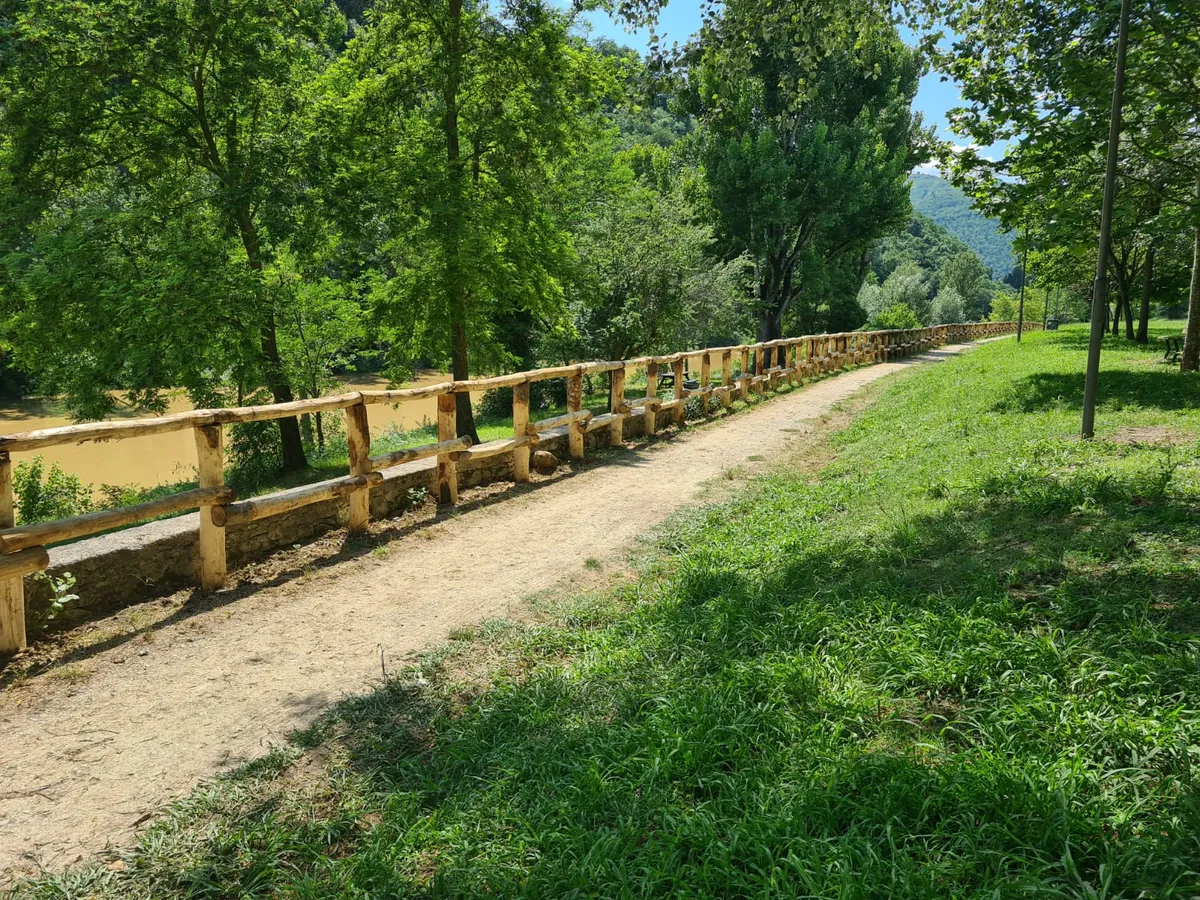
Photo: Comune di Pontassieve, CC BY 4.0 (resized)
Frequently asked questions
Where does the name Pontassieve come from?
From the bridge over the Sieve. The settlement was called Castel Sant’Angelo, after the fortress Florence built in 1357; over time the name Ponte a Sieve prevailed, giving Pontassieve.
How many gates of the old castle survive?
Three of the four: the Porta Aretina (Clock Tower), the Porta Fiorentina and the Porta Filicaia, of which the arch remains. The fourth, the Porta del Capitano, has been destroyed.
When was the Medici Bridge built?
In 1555, at the wish of Cosimo I de’ Medici, after a flood of the Sieve had destroyed the earlier bridge. It was restored in 1788 and partly rebuilt after the Second World War.
Where can I see the confluence of the Arno and the Sieve?
The Municipality points to the pedestrian walkway on Viale Diaz.
How do I get to Pontassieve from Florence?
By train from Firenze Santa Maria Novella: usually about 25 minutes. Check times and tickets on the Trenitalia app.
Can I go inside the Clock Tower?
According to Destination Florence, the inside can only be visited on request at the Pontassieve Town Hall: check before you go.
Stay a few minutes from the centre
From the Montefiesole countryside, the centre of Pontassieve is about a 10-minute drive: if you would like to base yourself here, read about where to stay in Pontassieve or book your stay.
- Wikipedia, “Pontassieve” (history, Castel Sant’Angelo, gates and walls, Palazzo Sansoni Trombetta, riverside park) and “Ponte a Sieve” (history of the bridge).
- Visit Tuscany, “Pontassieve” and “Palazzo Sansoni Trombetta in Pontassieve” (the 1357 castle, gates, square, Trombetta and Sansoni families).
- Municipality of Pontassieve, pages “Municipio” (Palazzo Sansoni Trombetta, mid-eighteenth century), “Confluenza Arno-Sieve” (Viale Diaz), “Parco Fluviale Fabrizio De Andrè”, “Dati sulla città”; press releases “Riapre il Ponte Mediceo” (24 November 2026) and “Ponte Mediceo, in fase conclusiva i lavori” (19 October 2026).
- Destination Florence (Metropolitan City of Florence), pages “Ponte mediceo” and “Porta Aretina”.
- Istituto e Museo di Storia della Scienza, “Ponte Mediceo di Pontassieve” (brunelleschi.imss.fi.it).
- Catalogo generale dei beni culturali (ICCD), record of the mural painting cycle by Ferdinando Folchi in Palazzo Sansoni-Trombetta.
- Photo credits: town hall, confluence and park, Comune di Pontassieve (CC BY 4.0, legal notes); Porta Fiorentina, Sailko (CC BY 3.0, Wikimedia Commons). Photos resized.